★★★★★
My Dr. Martínez is the best. From the first day you meet her in consultation she connects with you, answers all your questions and, above all, her results are natural with good scarring.
How much does fat transfer cost in Peru? Fat grafting from $4,200 USD (≈S/15,500) with Dr. Martínez (CMP 42467) in Lima. The price may vary depending on the medical evaluation. Book your appointment.
Leave us your name and WhatsApp. We reply by WhatsApp in under 1 business hour. The price is set after your medical evaluation.
Fat transfer — also called autologous fat grafting — takes fat from your own body, processes it and reinjects it into another area to add volume and contour with a natural material: your own. At the practice of Dr. María del Carmen Martínez (CMP 42467 · RNE 20164) in Santiago de Surco, fat transfer starts from $4,200 USD (≈ S/ 15,500) and is always defined after an in-person medical evaluation.
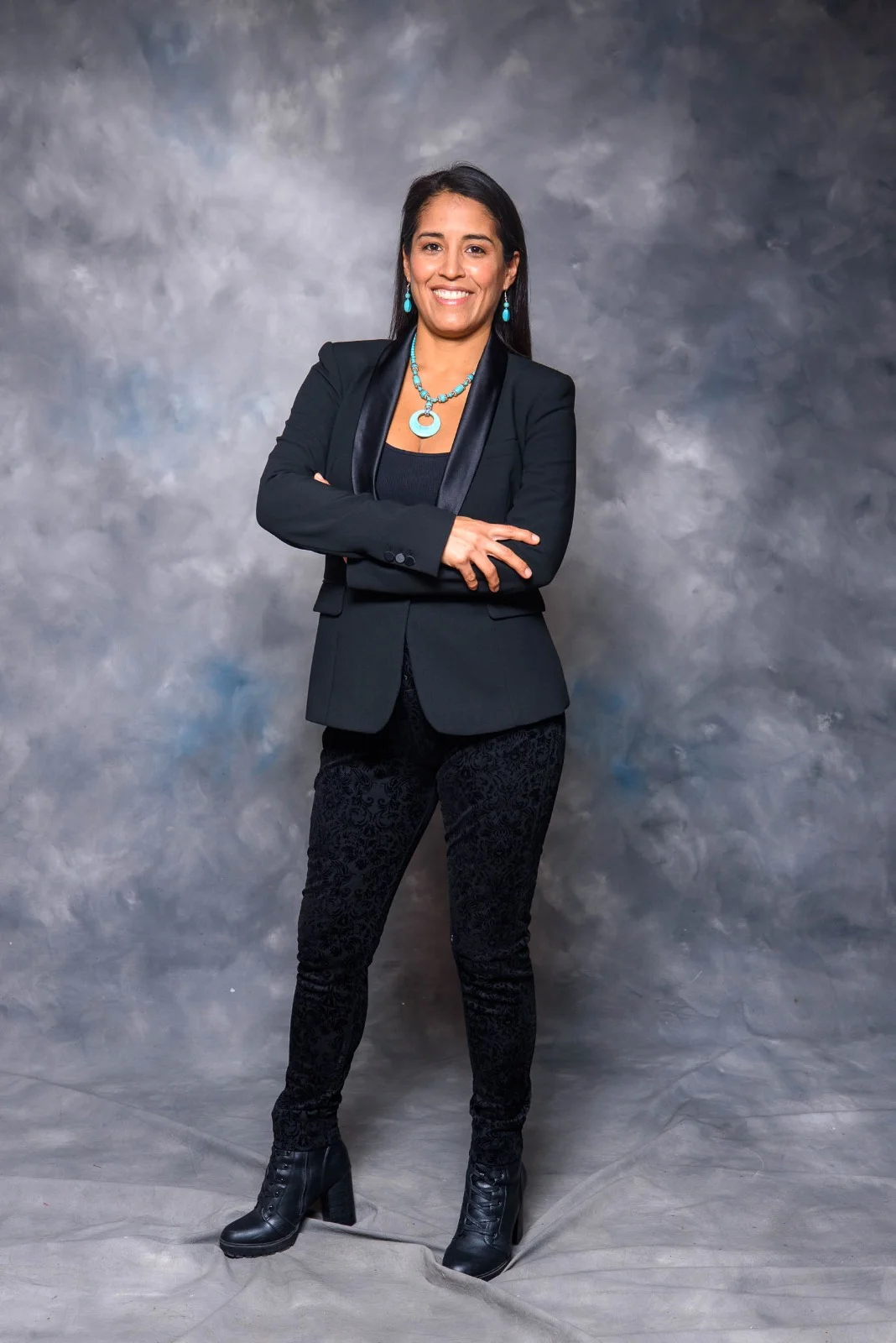
Dr. María del Carmen Martínez · Plastic surgeon · CMP 42467 · RNE 20164 · Updated September 30, 2026
* Reference, variable price: this is not a fixed price or set rate and may vary entirely depending on the medical evaluation, the recommended technique, the implants or materials, operating room time and the complexity of each case. The exact amount is confirmed after your assessment with Dr. Martínez (CMP 42467 · RNE 20164).
It's the first thing almost every patient wants to know, so we'll answer it upfront: in Lima, with Dr. Martínez, fat transfer costs from $4,200 USD (approximately S/ 15,500). That amount covers a procedure performed at an accredited clinic, with an anesthesiologist and operating room, and includes both fat harvesting and reinjection.
The price is a reference price and is confirmed at your personalized medical evaluation with Dr. Martínez (CMP 42467 · RNE 20164), depending on the technique and complexity of each case. The recipient area, the volume to transfer and the quality of the donor area drive the final cost, so we don't quote a surgery over the phone without examining the patient. You can review our other procedures on our prices page; you can book your evaluation consultation to find out the exact price for your case.
Fat transfer is an autologous fat grafting technique: fat is suctioned from an area where there is excess, processed to separate the viable cells, and that purified fat is reinjected where you want to add volume or contour. Because it uses your own tissue, there is no risk of rejection or foreign bodies, and the result feels natural. It should not be confused with a hyaluronic acid filler or an implant: the grafted fat integrates into the patient's tissue, although a portion of the graft is reabsorbed in the first months, something normal that is taken into account from the surgical planning stage.
How fat is processed and injected directly affects how much of it survives. That's why fat transfer should be in the hands of a board-certified plastic surgeon.
Not all of the transferred fat remains. Generally speaking, part of the graft is reabsorbed during the first three to six months, while the fat that becomes vascularized stays stable over the long term. Because of this partial reabsorption, a second session (touch-up) is sometimes needed to achieve the desired volume, and this is discussed from the first consultation. The result is not judged in the first weeks, while swelling is present: the final look can only be appreciated after several months.
The same fat grafting technique is used in very different areas. Depending on your goal, fat transfer leads to a specific procedure:
During your consultation, Dr. Martínez will tell you whether your case fits one of these applications and what can realistically be achieved with your anatomy.
To transfer fat, you need enough to harvest. The usual donor areas are the abdomen, flanks, waist and back. That harvesting step is itself a liposculpture that slims the donor area: the patient gains contour where there was excess and volume where it was lacking, in a single surgery. Very thin patients may not have enough fat for the desired volume, and this is assessed during the physical exam before surgery is proposed.
Fat transfer is major surgery and, like any surgery, it carries risks that should be discussed before signing an informed consent: partial reabsorption of the graft, asymmetry, contour irregularities, oil cysts or calcifications, hematomas, seromas, infection and, rarely but seriously, thromboembolic events. Buttock grafting carries a specific risk that the technique seeks to minimize by injecting the fat into the superficial plane and never into the deep muscle. The risk is reduced —not eliminated— by choosing a board-certified plastic surgeon and an accredited clinic, and by following post-operative instructions. No serious professional can guarantee you a result or a complication-free recovery.
Dr. María del Carmen Martínez sees patients at Calle Tutumo 194, Santiago de Surco, Lima. The evaluation consultation includes a physical exam, a review of your medical history and a written surgical proposal with the confirmed price for your case. You can book your appointment via WhatsApp at +51 912 052 479 or through our contact page.
With Dr. Martínez in Lima, fat transfer starts from $4,200 USD (≈ S/ 15,500). The price is a reference and is confirmed during the personalized medical evaluation with Dr. Martínez (CMP 42467 · RNE 20164), based on the technique and complexity of each case.
Part of the graft is reabsorbed in the first three to six months, and the fat that develops a blood supply remains stable long term. Because of this partial reabsorption, a touch-up is planned in some cases to reach the desired volume. The exact percentage varies from patient to patient.
The three most common applications are buttock augmentation (BBL), breast augmentation with fat and facial fat grafting. The grafting technique is the same; what changes is the recipient area and the amount of fat transferred.
No. The fat that survives and becomes vascularized integrates permanently and behaves like the rest of your tissue: if you gain or lose weight, that volume also changes. All that is lost is the fraction reabsorbed in the first months.
Yes. You need a donor area with enough fat —usually the abdomen, waist or back— to harvest the material to be transferred. Very thin patients may not have enough fat for the volume they want, and this is assessed during the physical exam.
The incisions used to extract and inject the fat measure just a few millimeters and are placed in natural folds, so they usually become barely visible over time with the recommended care. Healing is individual and an identical result cannot be guaranteed for every patient.
We answer all your questions, evaluate your case and give you a tailored plan.
Every case is unique. The price is set after a medical evaluation with Dr. Martínez. Leave us your details and we'll contact you via WhatsApp.
Ready for your evaluation? The price may vary depending on the medical evaluation.
Your surgeon will tell you which garment to wear and for how long. You can buy them right here and have them delivered to your home. Visit the shop
What our patients say
My Dr. Martínez is the best. From the first day you meet her in consultation she connects with you, answers all your questions and, above all, her results are natural with good scarring.
My experience with Dr. Martínez was simply spectacular. From the first consultation I felt heard, understood and in the hands of a true professional. Breast augmentation was something I had always dreamed of.
Choosing to have surgery with Dr. Martínez was a great decision. I'm now 8 days post-op from my breast surgery and I loved the result in my first week. Kind, professional treatment from the Dr. and the whole staff.
I'm very happy with the care and the results of my rhinoplasty with Dr. Martínez. I recommend her.
I was in Dr. Martínez's hands for upper and lower blepharoplasty and it went really well. I had my follow-up today and everything is excellent; the care is outstanding and reliable.
Excellent tummy tuck surgery. I feel satisfied and very happy with how I'm turning out, and grateful for Dr. Martínez's monitoring and follow-up.
I had a horrible scar under my lower eyelid. I went to several surgeons and no one would touch it, until I came to Dr. Martínez. Today I can go out with confidence.
The best plastic surgeon. She gave me botulinum toxin and I was very happy with the result. I recommend her 100%.